
यह भी देखें


 22.07.2026 08:07 PM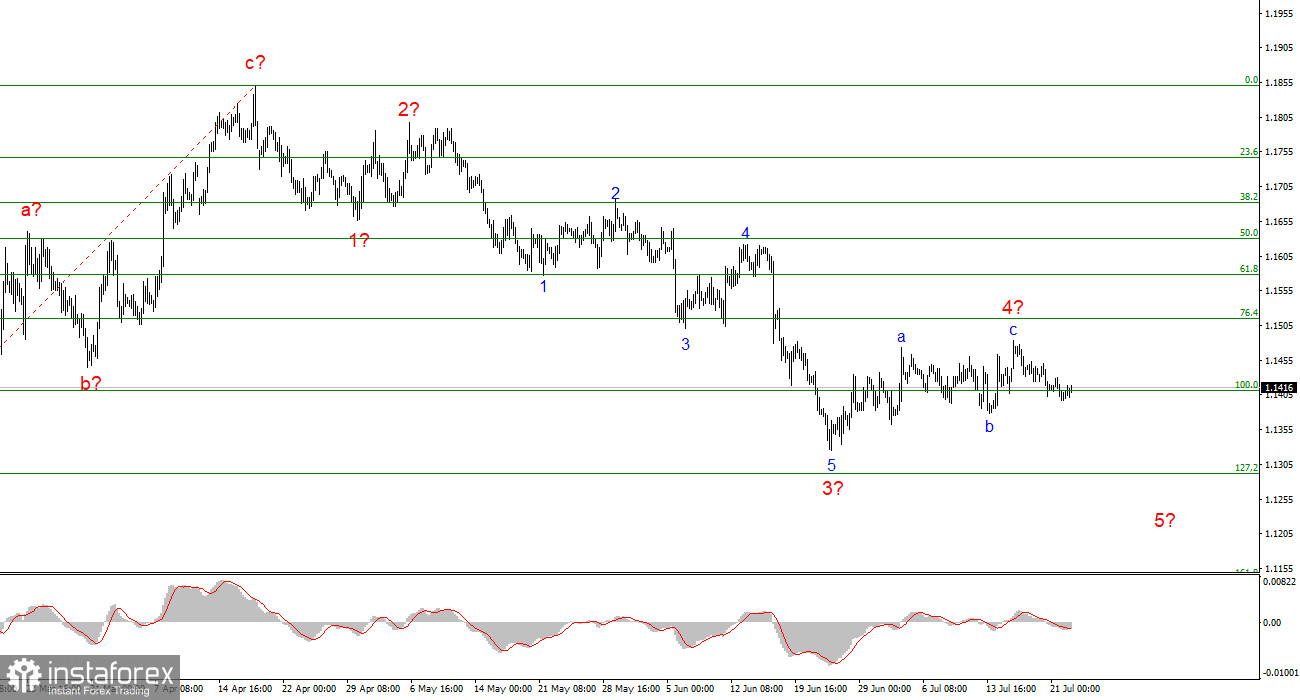
The wave structure on the 4-hour EUR/USD chart continues to evolve. There is still no indication that the bullish trend segment (shown in the lower chart), which began in January of last year, has been invalidated. However, the overall structure has now taken on the characteristics of a corrective pattern. From a long-term perspective, Wave C is expected to develop, with its low positioned below the low of Wave A. At present, Wave C has already moved below the low of Wave A, meaning it could be completed at any time. However, if the news backdrop remains favorable for the U.S. dollar, this wave may extend further.
On the lower timeframe, I can identify a classic five-wave bearish structure. If this interpretation is correct, the market is currently forming Wave 4, while Wave 3 has already developed into a five-wave pattern. Once this structure is complete, the pair may transition into a new bullish wave sequence. However, based on the current wave count, Wave 5 is still expected to form. Consequently, the euro could decline toward the 1.13 level.
EUR/USD gained 20 basis points on Wednesday, with trading activity once again remaining subdued. The market still sees little reason to either buy or sell the euro, which explains the lack of participation. At times, this appears unusual, given that economic data continues to be released, central banks are holding policy meetings, and geopolitical headlines remain constant.
I can understand why traders are ignoring geopolitical developments. Looking at the flood of contradictory and often confusing news over the past several months, it is easy to see why many participants have chosen to tune it out. However, the market is also largely ignoring economic data and has been unable either to complete the current bearish trend or begin building a new bullish one.
Today, reports emerged that Donald Trump is considering launching additional strikes against Iran, although it is unclear how these would differ from the ongoing military operations. The United States continues its attacks on Iran, while Iran continues retaliatory strikes against U.S. military bases and naval assets. In short, the conflict in the Middle East remains in an escalation phase, while oil prices continue to climb almost daily.
As a result, inflation is likely to accelerate in both the United States and the eurozone in July. The European Central Bank may continue tightening monetary policy, while the Federal Reserve is once again weighing whether additional tightening is justified.
The ECB is scheduled to announce its latest policy decision tomorrow, and interest rates are widely expected to remain unchanged. Therefore, anyone expecting Thursday's meeting to trigger a breakout from the current trading range may be disappointed. The euro continues to edge lower, although Wave 4 within Wave C could still evolve into a more complex five-wave corrective structure.
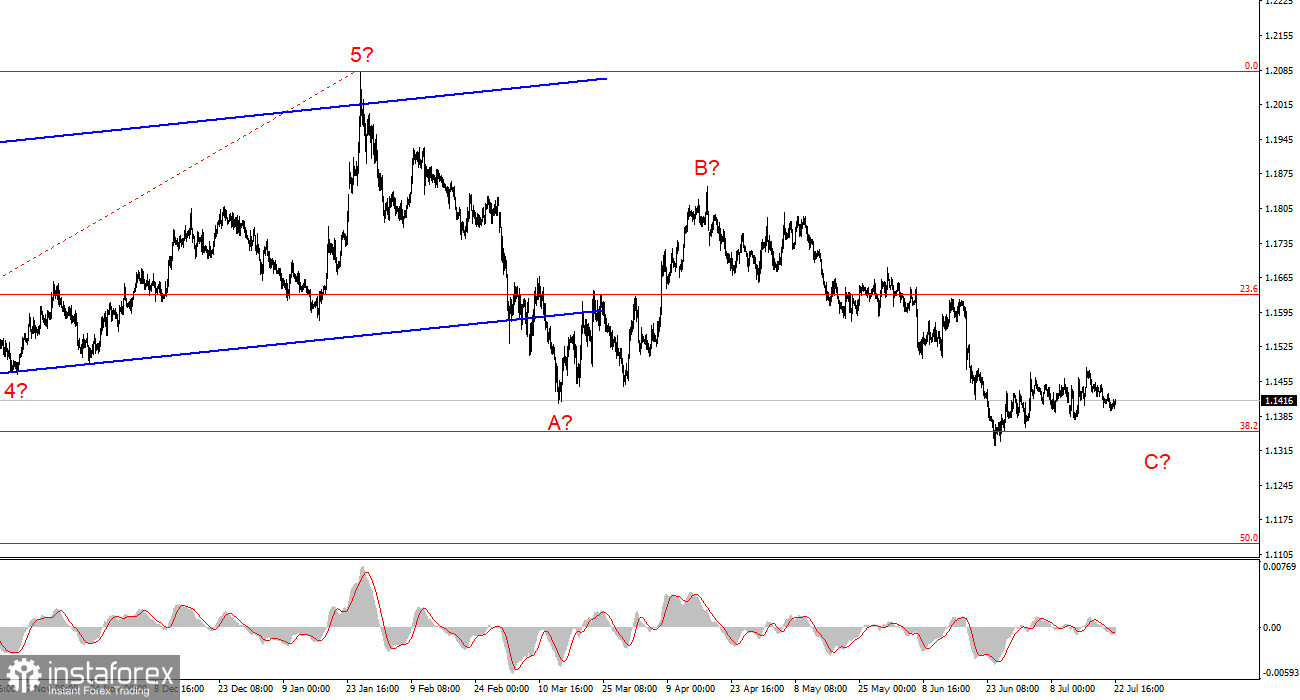
Based on my analysis, EUR/USD remains within a long-term bullish trend segment (shown in the lower chart), while the shorter-term outlook remains bearish. In my view, this is a reasonable period to begin considering long positions, although the pair could still decline toward the 1.13 level as Wave 5 of Wave C unfolds. Wave structures often produce unexpected developments, so I would already begin shifting my focus toward buying opportunities.
On the higher timeframe, the previous bullish trend has transitioned into a corrective wave sequence. In the near term, Wave C is expected to develop toward the 1.1352 level, corresponding to the 38.2% Fibonacci retracement. Once the A-B-C corrective structure is complete, a new long-term bullish trend may begin.

