
Lihat juga


 04.03.2026 12:48 AM
The war in Iran began on Saturday night and has quickly escalated to a global status within just a few days. The military conflict in the Middle East currently involves not only Israel, the US, and Iran but also almost all neighboring countries, which either support the US or back the Iranian Islamic regime. Thus, the war has transformed from a "one-on-one" situation to a "coalition against coalition." The Iranian coalition is much weaker than the American one, but it is important to understand that attacking on foreign soil is always more challenging than defending one's own territory.
In simple terms, Iran's opponents must exert three times more effort to destroy infrastructure, capture territories, or accomplish any other objectives than Iran does to defend its own territory, infrastructure, sovereignty, and independence. As the first few days of the conflict have shown, Iran, on one hand, is not going to remain silent and is prepared to respond to any targets, directly or indirectly connected to the US or Israel. On the other hand, Tehran has enough missiles and weaponry to carry out strikes without holding back.
In the meantime, markets, amid panic, shock, and a flight from risk assets, are asking how long the war in Iran could last. Answering this question is extremely difficult, as the initiative lies with Donald Trump. Only Trump knows of his plans. Moreover, the American president's plans can change five times in one day. Therefore, personally, I do not even attempt to predict the timeline for the conclusion of this war and its consequences for the world and the financial markets.
On Monday, Trump stated that the military operation in Iran could last 4-5 weeks. According to the American leader, it will take that long to eliminate the country's military leadership. Trump added that American armed forces are operating ahead of schedule, which means the war could end sooner. He also mentioned that if necessary, the US is prepared to fight for as long as needed. Secretary of State Marco Rubio clarified that there are no specific timelines for military intervention. Clear goals have been set, and the war will continue until these goals are achieved. Rubio also noted that the most challenging and destructive strikes for American military forces are still to come. Consequently, markets might prepare for an escalation of the conflict and stronger retaliatory strikes from Iran in the near future. The situation is unlikely to improve soon.
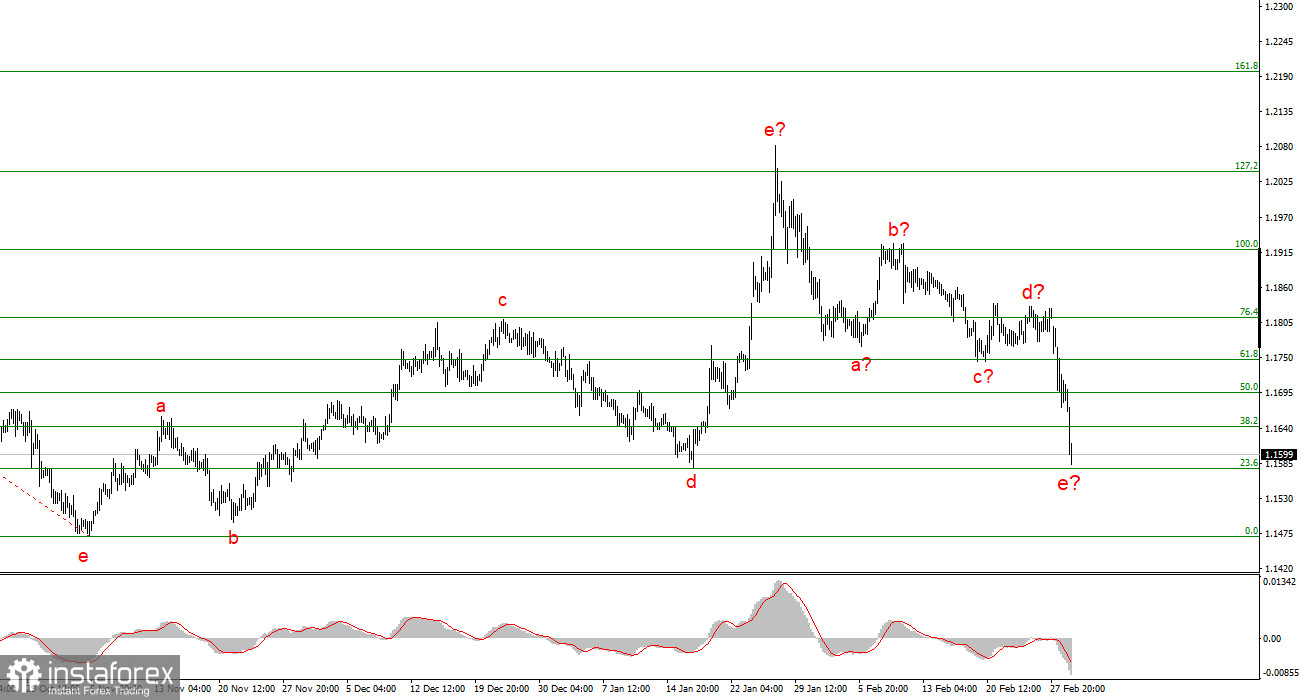
Based on the analysis of EUR/USD, I conclude that the instrument continues to form a bullish trend. Trump's policies and the Fed's monetary policy remain significant factors in the long-term decline of the American currency. The targets for the current section of the trend could reach the 25 figure. At the moment, I believe that the instrument remains within the global wave 5, so I expect prices to rise in the first half of 2026. The corrective structure a-b-c-d-e can be completed at any time, as it has already taken a convincing shape. I believe it is now prudent to look for areas and levels for new purchases, with targets set around 1.2195 and 1.2367, which correspond to 161.8% and 200.0% Fibonacci. However, one should take into account the war in Iran.
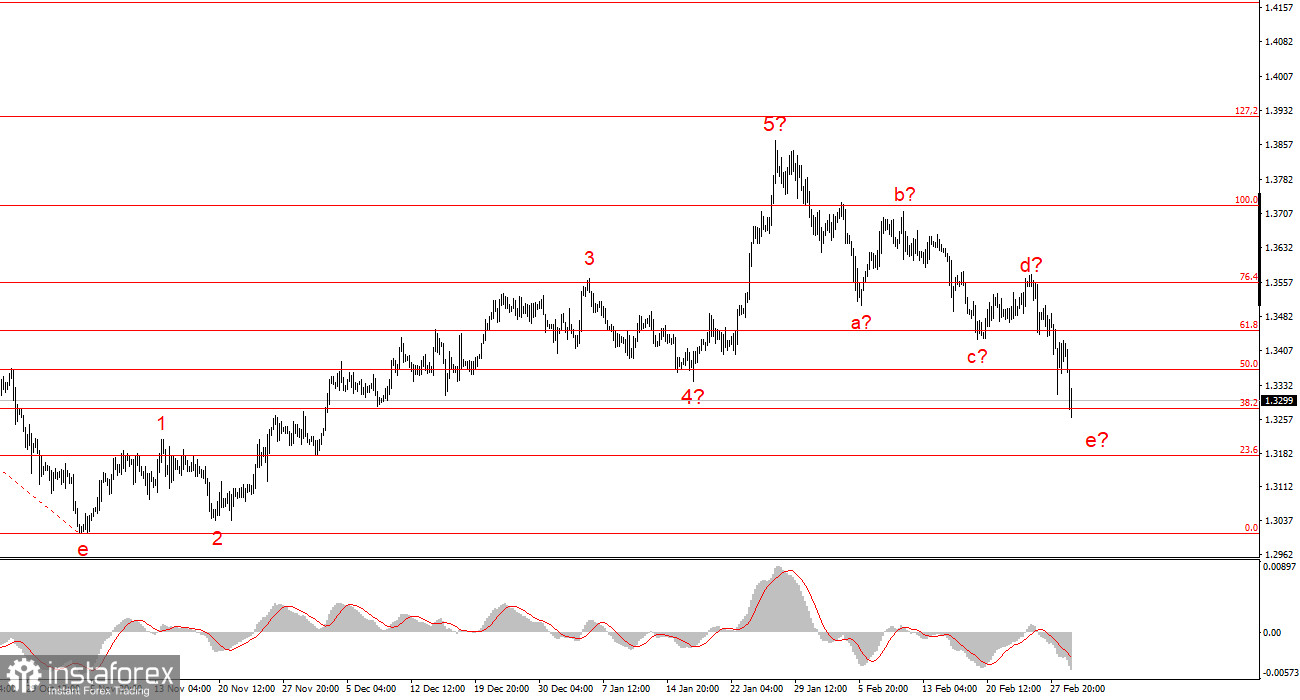
The wave structure of the GBP/USD instrument is quite clear. The five-wave upward structure has completed its formation, but the global wave 5 can take a much more extended form. I believe that the construction of a corrective wave set may be completed soon, after which the upward trend will resume. Therefore, I can now advise looking for opportunities for new purchases, with targets above the 39 figure. In my view, under Trump, the British pound has every chance of rising to $1.45-$1.50, but recent events in the Middle East are complicating the corrective structure.


