
Lihat juga


 22.10.2026 12:49 AM
Buy while the blood flows. Or while the fires continue on the streets of Paris. An old maxim inspires EUR/USD bulls to new attacks. While euro opponents fan panic, claiming that France is not Greece that provoked the European debt crisis, traders are gradually returning to long positions in the regional currency. It's not certain the devil will be worse than he's painted.
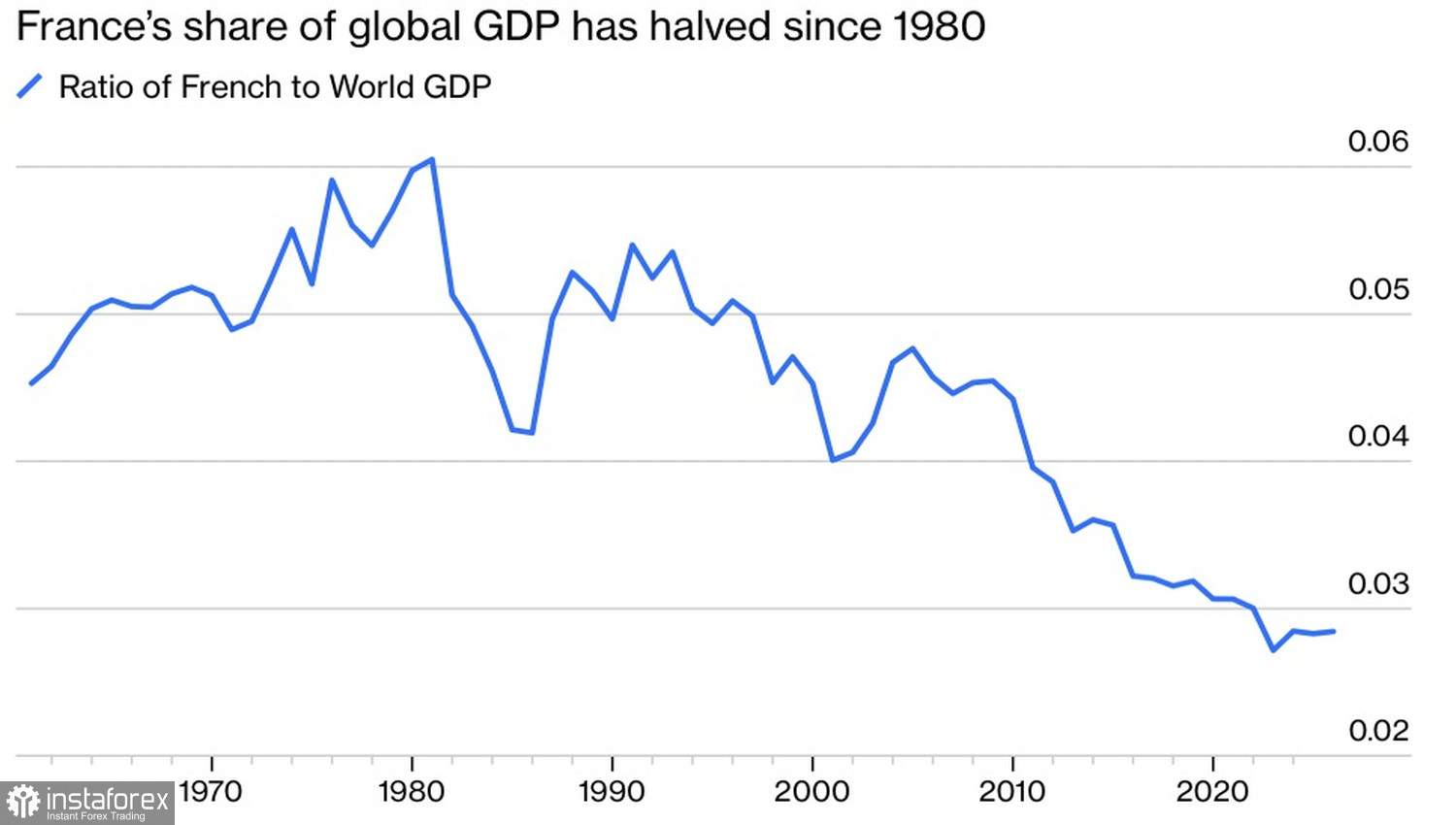
Everything is known in comparison. Yes, France is indeed a larger player than Greece. However, its share of global GDP has now fallen to less than 3%. In 1980 it was above 6%. US Treasury Secretary Scott Bessent seems right that markets should not fear what is happening in Paris.
Despite French 10-year yields rising to 5% — a level not seen since 2002 — and the spread with German bonds widening to a 15-year high, there are no signs of contagion across the currency bloc. Yields on Italian or Greek debt are rising much more slowly. There are no signs of the same sell-offs as in Paris.
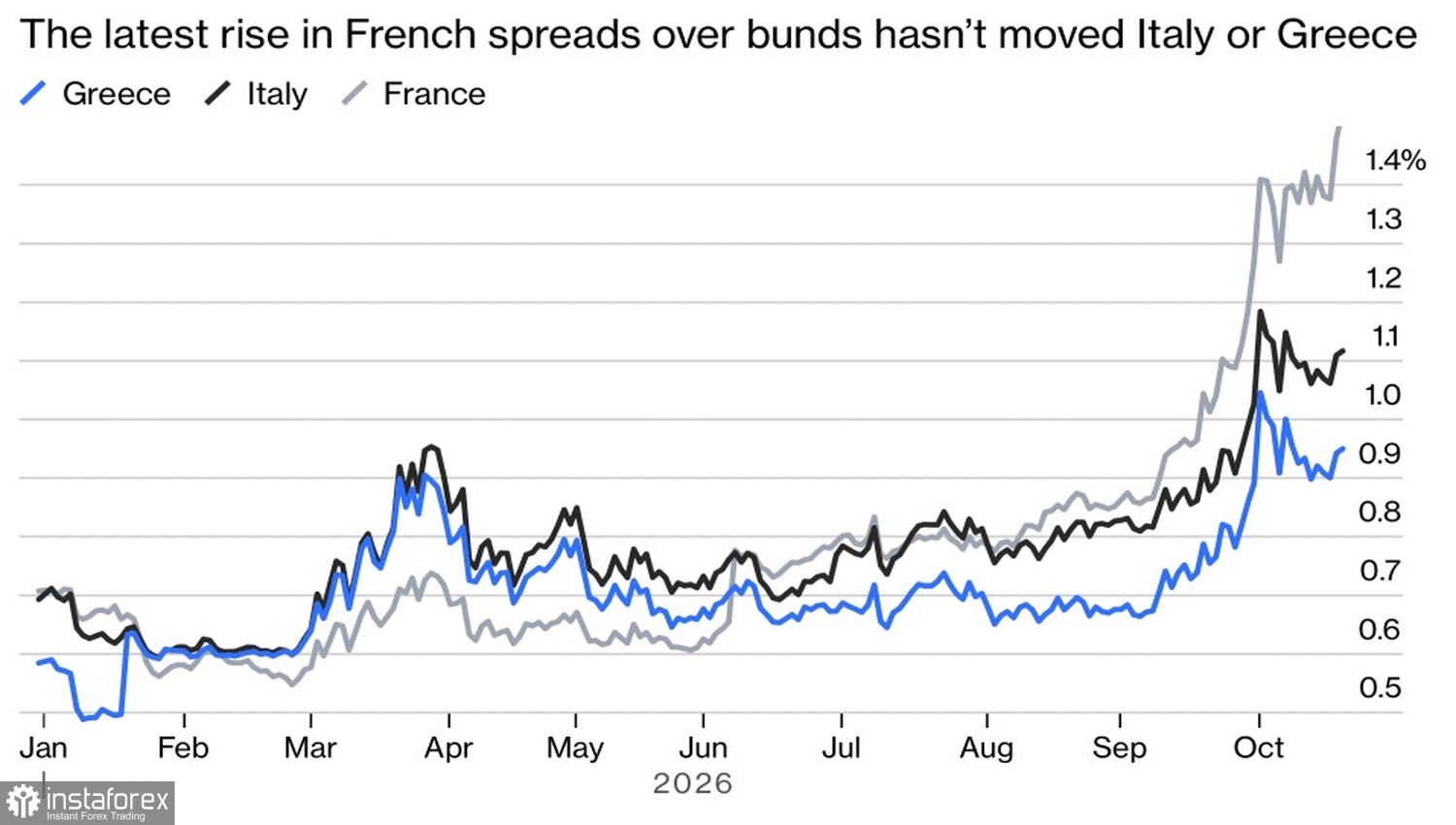
The differences from 2012 don't end there. Back then, European banks bore the main hit, holding a large share of peripheral euro-area sovereign bonds on their balance sheets. That hit the entire system and forced European Central Bank chief Mario Draghi to say the central bank would do whatever it takes to save the euro. That is no longer the case: shares of other banks, except French ones, are not being sold off. Add to that the far greater tools available to today's central bank to stabilize financial markets, and the fall in EUR/USD starts to look excessive.
If the European debt crisis does not repeat, the euro will begin to recover the positions lost in August–September, especially since the Federal Reserve is unlikely to raise rates before December. And the question of tightening monetary policy in 2027 remains open. The reason is a slowing US economy. Until 2026, artificial intelligence supported it in two ways.
Massive investments boosted GDP growth, and the rally in equity indices boosted consumption through the wealth effect. Next year that may change. Capital expenditures and corporate profits will slow, and the economy will follow. The Fed will hold back on raising the federal funds rate, which will hit the US dollar.
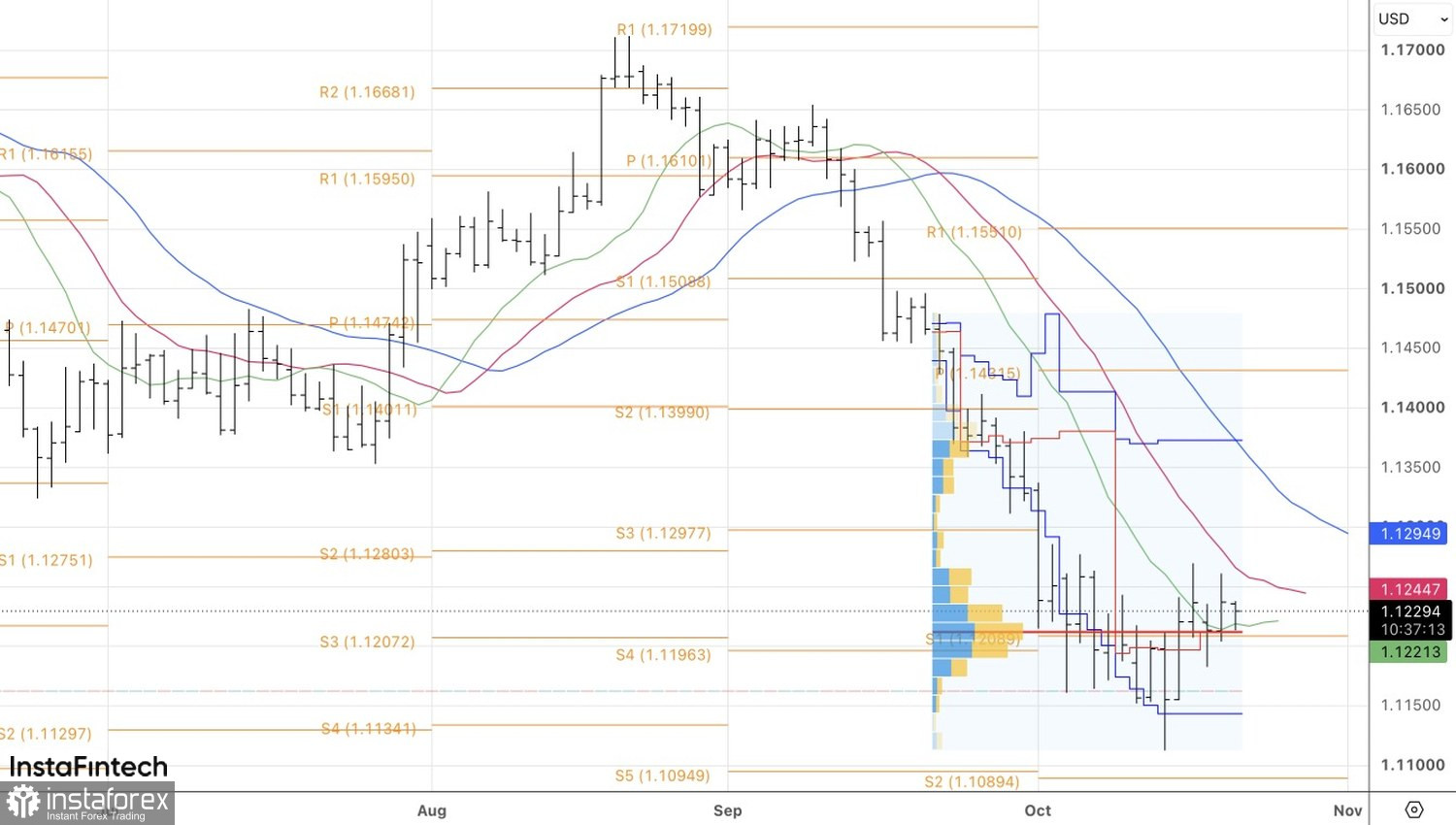
Technically, an inside bar may be forming on the daily EUR/USD chart. A breakout above its high at 1.1235 would allow opening long positions, while a fall below the fair value at 1.1215 would return to shorts. For continuation north or south, the euro needs to exit the $1.1180–1.1260 consolidation range.


