
Vea también


 20.07.2026 11:20 AM
A packed week places markets between several strong drivers: the ECB rate decision and ECB President Christine Lagarde's press conference, a string of quarterly reports from major tech and industrial players (including Alphabet, Tesla, IBM, and Intel), and key macro from Asia — from China's LPR to Japan's CPI.
Geopolitical flare-ups around the US and Iran injected a fresh impulse into oil and rekindled inflation expectations, hitting the semiconductor complex. The appearance of China's Kimi K3 model from Moonshot AI amplified volatility across assets from chips to crypto. At the same time, leadership in market cap is shifting between Apple and Nvidia.
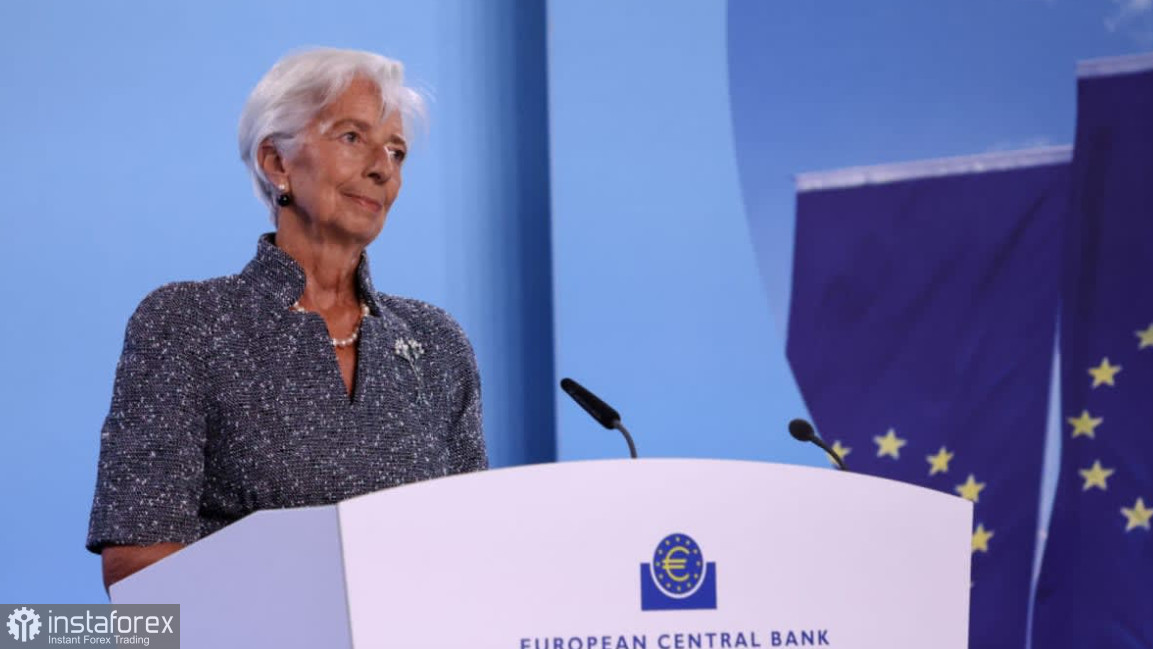
The week of 20 July is packed with market movers: major policy decisions, corporate results, and Asian data that can rattle multiple asset classes.
The European Central Bank announces its policy decision on 23 July. Derivatives markets are nearly unanimous — the odds that the deposit rate will remain at 2.25% are about 99%.
Recall the ECB raised interest rates by 25bp in June — its first hike since 2023 — citing rising inflation expectations amid geopolitical tension and high commodity prices. Christine Lagarde said in Sintra that "all the conditions for rate hikes were met."
The focus will be Lagarde's press conference: markets want to know whether a further move could come as soon as September. Reuters reports five Governing Council members prefer postponing further action until September, in part because of uncertainty around proposed US tariffs on EU imports. Eurosystem staff projections published in June imply average inflation of 3.0% in 2026, easing to 2.3% in 2027.
Earnings season is equally busy. Alphabet and Tesla report Q2 results on 22 July — their numbers could set the tone for the tech sector and the wider market.
Alphabet enters the week after a strong Q1 (revenue $109.9bn, +20% y/y). Investors will watch whether Google Cloud momentum persists and whether ad revenues remain resilient as AI products roll out.
Tesla — down about 15% year-to-date — is under scrutiny for automotive revenue dynamics; the comparable quarter a year ago saw a 16% decline in auto revenue.
Also reporting this week: IBM, Intel, and battery giant CATL — results that may sway sentiment across semiconductors, electronics, and autos.
The People's Bank of China is widely expected to keep the 1- and 5-year loan prime rates (LPRs) unchanged on Monday, 20 July (at 3.00% and 3.50% respectively) — a 14th consecutive month of stability, per a Reuters poll of 23 market participants. Citi analysts note, however, that a 10bp cut could still happen "as early as July" as part of gradual easing.
Japan's national CPI for June is due Friday, 24 July. Headline inflation was 1.5% y/y in May, while the Bank of Japan's key rate remains at 0.5%. Most economists expect policy to tighten later this year, but not at this stage.
Trading tools mentioned in this note are available on the InstaTrade platform. To react quickly to market events, open an InstaTrade account and download the mobile app to trade from any device.
Asian markets opened Monday in the red as a renewed US–Iran escalation pushed Brent above $90/bbl and intensified selling in semiconductor and AI-related stocks. The result is another bout of volatility after weeks in which markets erased trillions of dollars of market value.
In early Asian trade, Brent gained roughly 3% and pierced $90/bbl for the first time since mid-June — extending a weekly rally of about 15.9%, the sharpest run since April. WTI also climbed, up roughly 2.4%.
The pressure stems from a series of US strikes on Iranian targets — Washington says the actions are aimed at degrading Iran's military capabilities used to attack commercial vessels in the Strait of Hormuz.
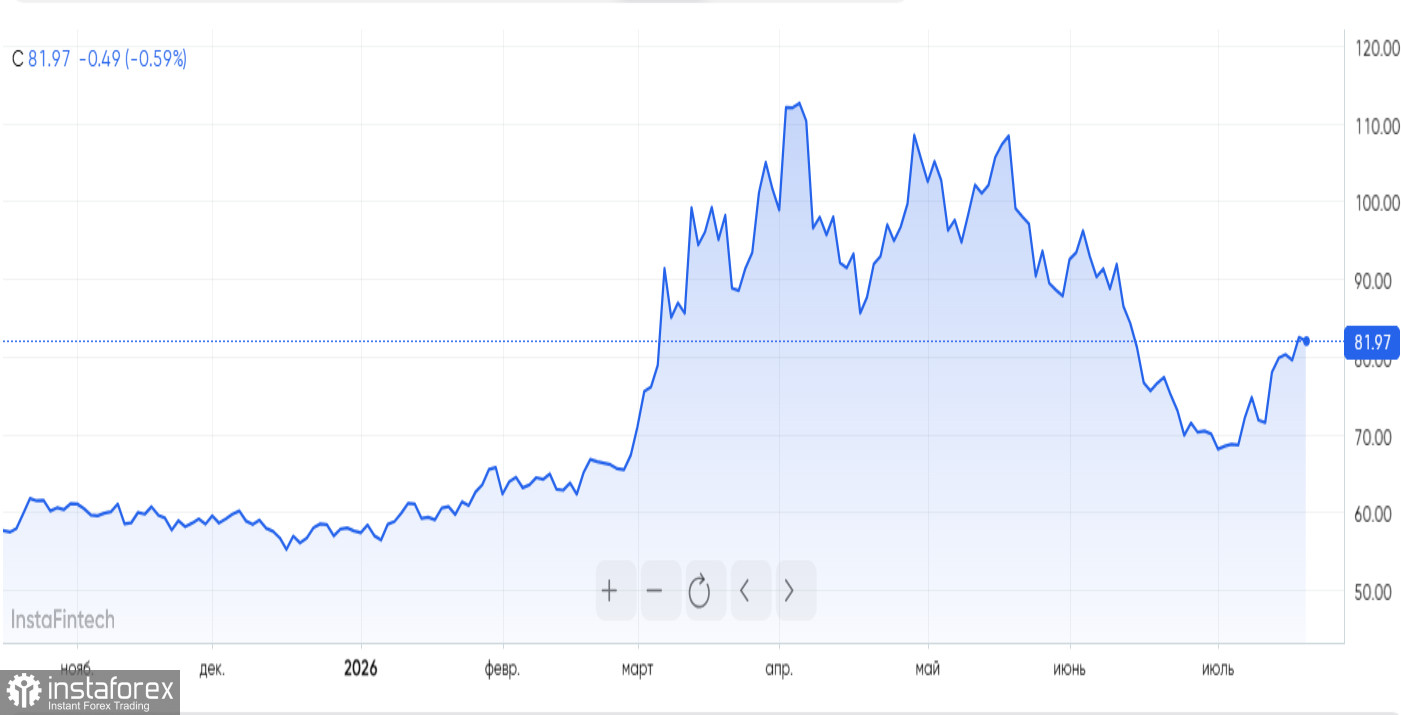
Analysts warn of the risk of global crude stock draws by September and cite Brent targets in the $95–$105/bbl range.
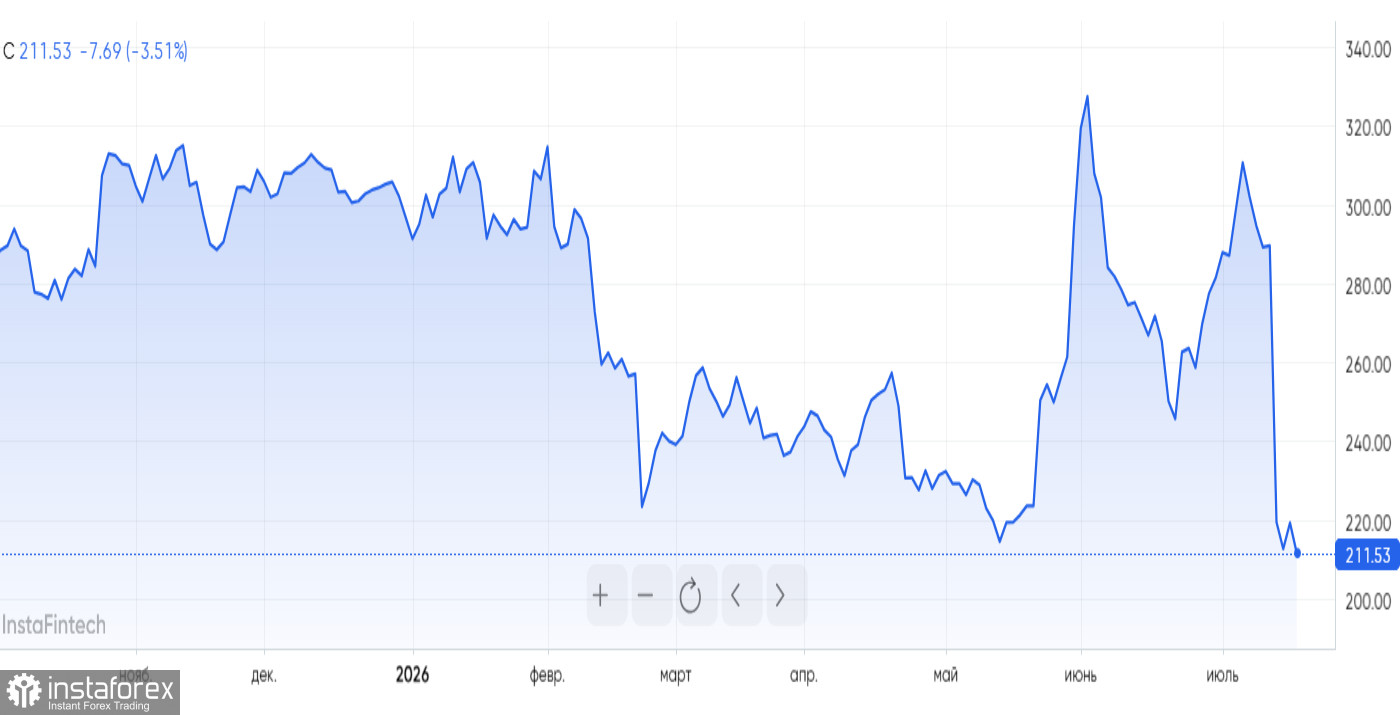
The energy shock hit while the semiconductor sector was already in the midst of a severe correction. The Philadelphia Semiconductor Index fell more than 20% from its June 22 record high last week, formally entering bear-market territory. For the week to July 18, the index dropped about 10% — the largest weekly decline since April 2025.
In Japan, the Nikkei 225 plunged by over 4,100 points intraday on Friday and finished the session down about 6.18%, with Kioxia and Tokyo Electron among the hardest hit names. South Korea's KOSPI closed down 6.37%, pressured by falls in Samsung Electronics and SK Hynix.

On Saturday, Bitcoin staged a partial recovery, trading around $64,000 after a sharp drop on Friday when investors fled risk amid sell-offs in the semiconductor and broader tech complex.
The panic wave followed the release of a new Chinese AI model, Kimi K3 from Moonshot AI, an open model with some 2.8 trillion parameters that, according to Forklog, outperformed leading Western systems on programming tasks.
Traders have already dubbed the event the "Kimi moment," drawing parallels with the DeepSeek shock in early 2025, when a single session erased hundreds of billions of dollars of market cap from chipmakers.
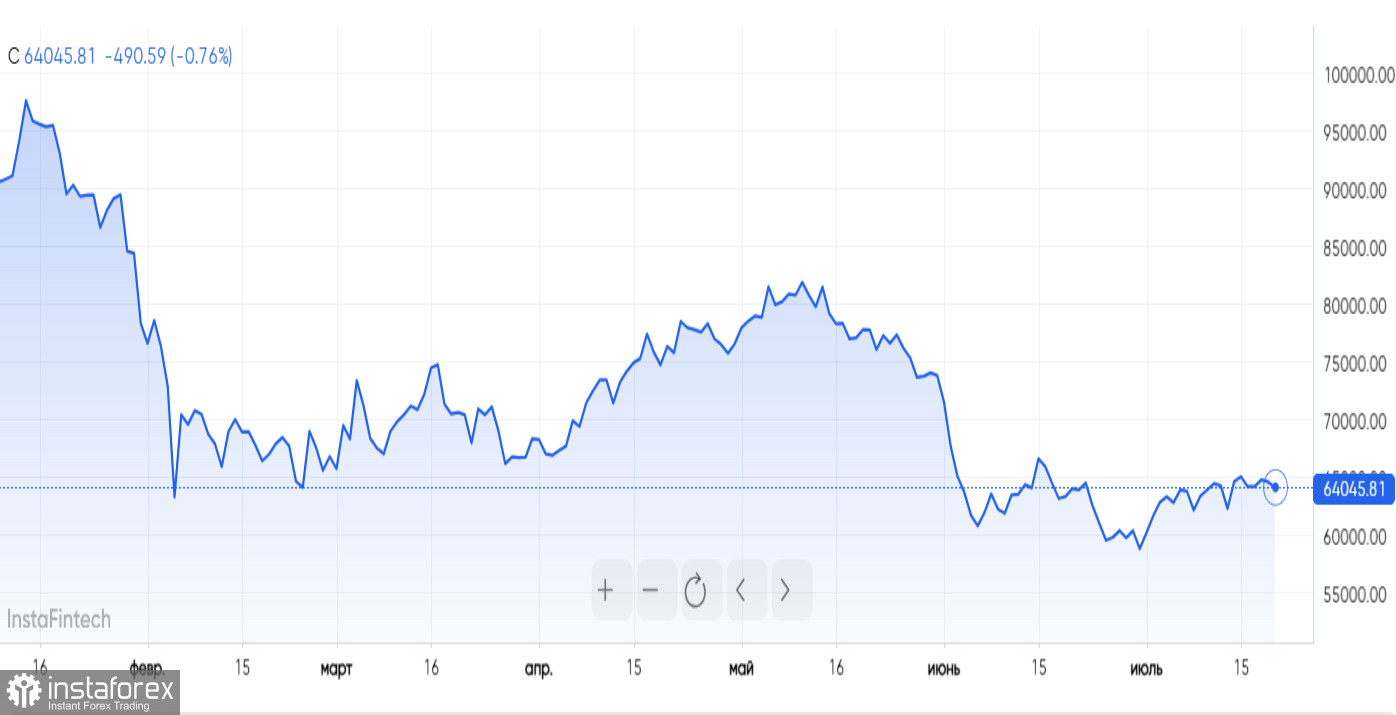
Friday's impact was quick and global: the KOSPI plunged by more than 6%, the Nikkei 225 dropped by over 4%, and the Philadelphia Semiconductor Index fell by roughly 4%. The Nasdaq 100 declined by nearly 2%, with Nvidia, AMD, and Intel among the losers. Bitcoin did not withstand the broad risk?off move and fell to $62,516 before finding support.
By Saturday morning, the crypto benchmark had recovered some losses and returned to roughly $64,000, notching about a 1.7% gain from Friday's lows, according to Kraken data. The wider crypto market followed Bitcoin higher and posted modest gains, although weekend trading volumes remained subdued.
KuCoin analysts note that in July 2026, Bitcoin increasingly behaves like a levered instrument closely tied to the AI investment cycle, jumping on news about Korean chips and falling on breakthroughs in Chinese models.
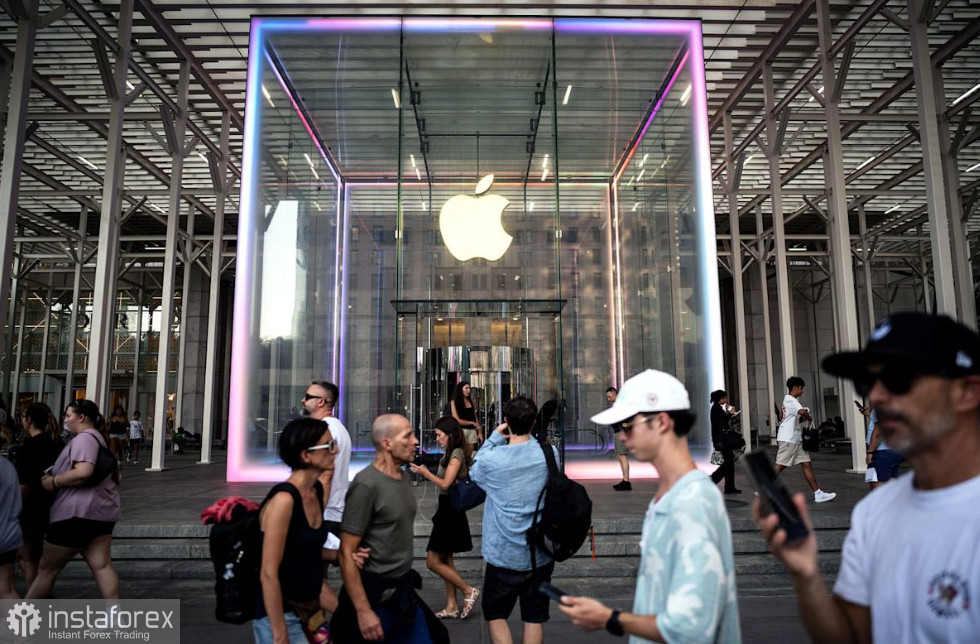
A small morning drama played out on the exchanges on Friday: Nvidia shares slipped by roughly 3.5–3.9% in early trade, while Apple's stock held steady. That was enough for Apple to reclaim, for a brief period, the title of the world's most valuable public company. Reuters reported Apple's market cap at about $4.88 trillion at the peak, while Nvidia's fell to roughly $4.86 trillion.
Forbes noted the drop in Nvidia was closer to 3.9%, putting its market value near $4.82 trillion before part of the loss was recovered. By the close, Nvidia had moved back ahead: Fox Business reported Nvidia's market cap around $4.92 trillion versus Apple's $4.89 trillion. CNBC similarly described the morning reshuffle: Apple briefly passed Nvidia at the open, but leadership switched again by the close.
The skirmish illustrates how tight valuations are between the two tech giants — small percentage moves in one name can change the leadership picture.
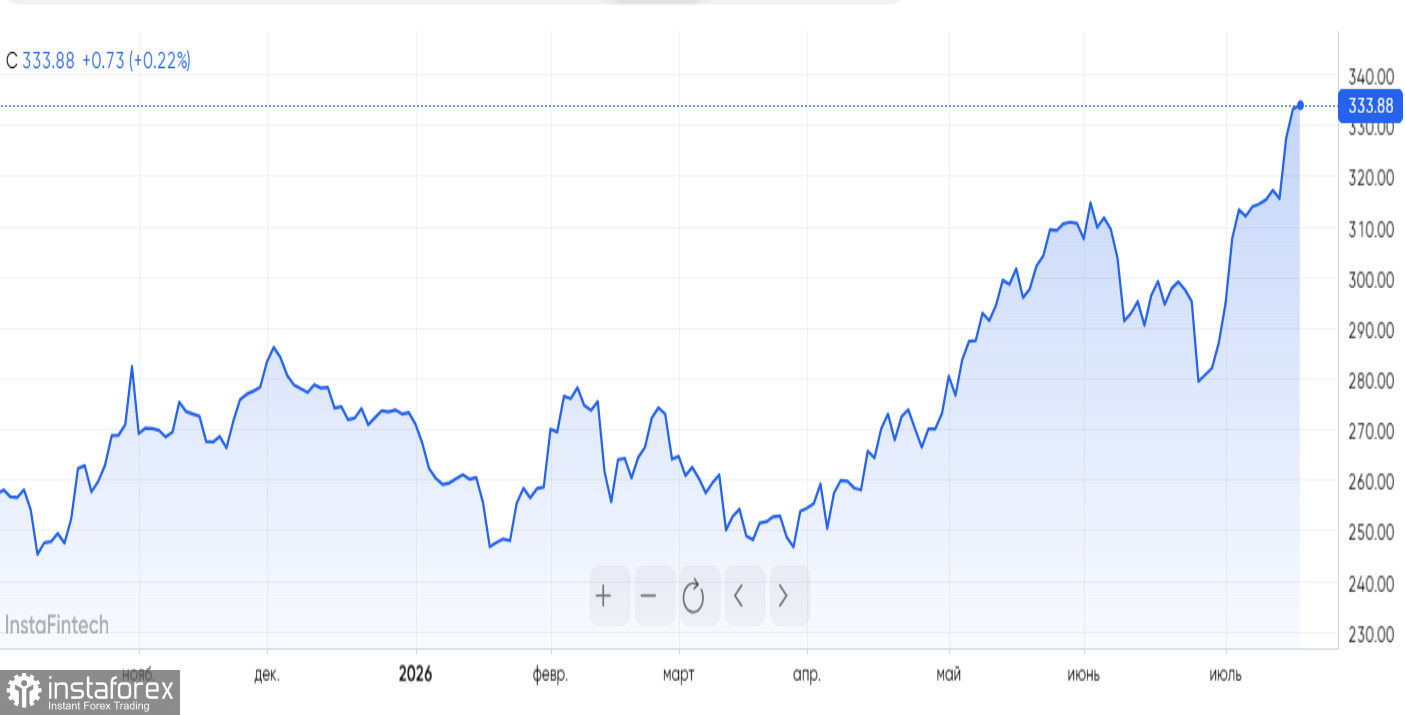
Apple has gained roughly 23% year-to-date in 2026, outpacing the broad market and its fellow Magnificent Seven members. Investors value Apple's relatively conservative capex profile and its ability to monetize AI through a large services ecosystem and device base.
Nvidia looks relatively weaker this year within the chip cohort: after June's sell-off, the stock traded nearer $195 in early July. The company had been the leader, surpassing Microsoft in June 2025 and reaching a $5 trillion market cap in October that year.
Trading instruments referenced in this note are available on the InstaTrade platform. To take advantage of market moves, open a trading account with InstaTrade and download the company's mobile app for convenient access to trades.


