
Vea también


 23.10.2026 05:34 AM
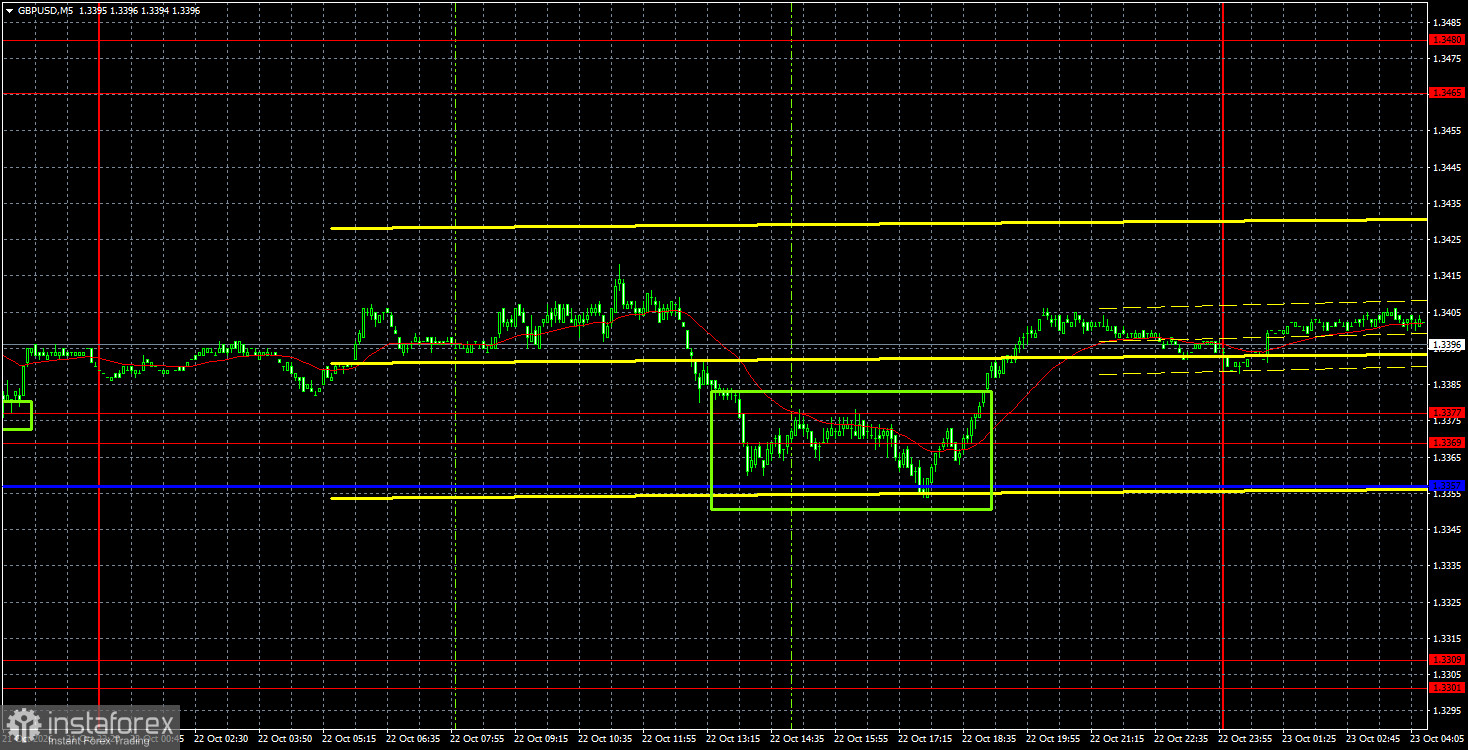
The GBP/USD currency pair attempted a modest correction on Thursday and largely achieved it. Price fell to the critical Ichimoku line and tested the 1.3369–1.3377 support area. Traders failed to break these two supports, so the upward impulse persists and may continue today—especially if UK business-activity and retail-sales reports prove as positive for the pound as the recent inflation and unemployment releases. Sterling, unlike the euro, is rising against the dollar. One could attribute this to the Bank of England, which may hike the key rate in early November, but recall that the European Central Bank has already tightened twice and plans a third tightening before year-end. You might argue the French crisis is to blame, but that explanation is not fully convincing. In any case, sterling is rising while the euro is not.
Technically, the pound continues to form a new uptrend. Since the sideways channels on the daily and weekly TFs remain relevant, it is logical to expect a move to their upper boundaries after working off the lows. This gives traders a near target of 1.3650.
On the 5-minute TF, one buy signal formed on Thursday as a bounce from the 1.3357–1.3377 area. Thus, the price may continue to work off that signal and advance today. UK reports may influence the pair's moves.
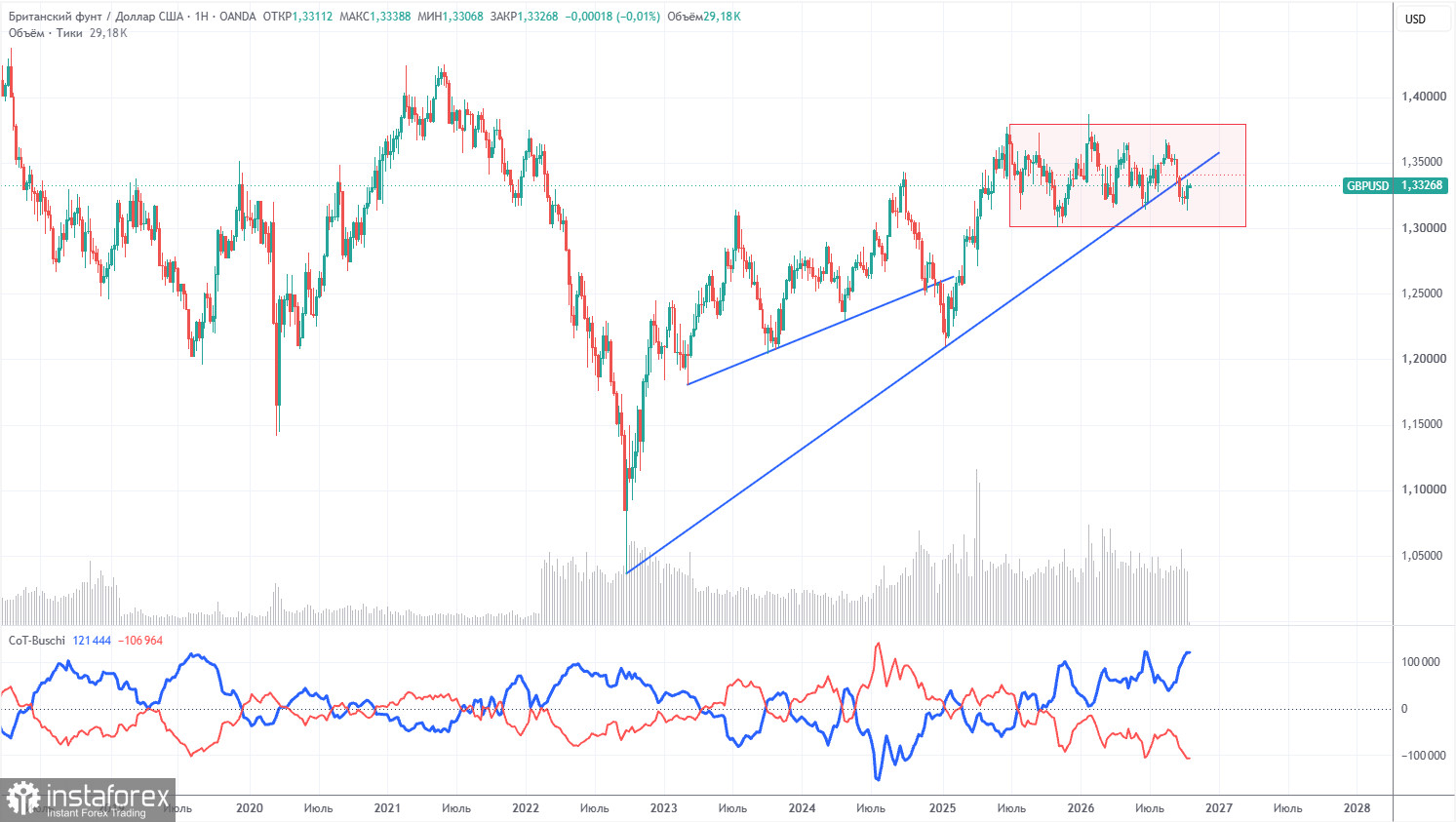
COT reports for the pound show that non-commercial traders have dominated selling for several months. The net position remains negative despite the persistent long-term uptrend. Given events in the Middle East, it is unsurprising that dollar demand remained fairly high in 2026. The US–Iran war is formally on pause but not over. The Federal Reserve's changed monetary stance also supports the dollar, and the ascending trend line has been overcome. However, it was broken amid a flat, so we do not consider the uptrend complete.
Over the long run, the dollar continues to weaken under Donald Trump-associated policies, as shown on the weekly chart. The trade war will continue in one form or another, and Trump's policies weaken the US currency both directly and indirectly. The long-term uptrend remains intact. According to the latest COT report (October 13), the "Non-commercial" group closed 1,100 contracts and opened 8,300 SELL contracts — a net reduction of 9,400 contracts in the group's net position over the week.
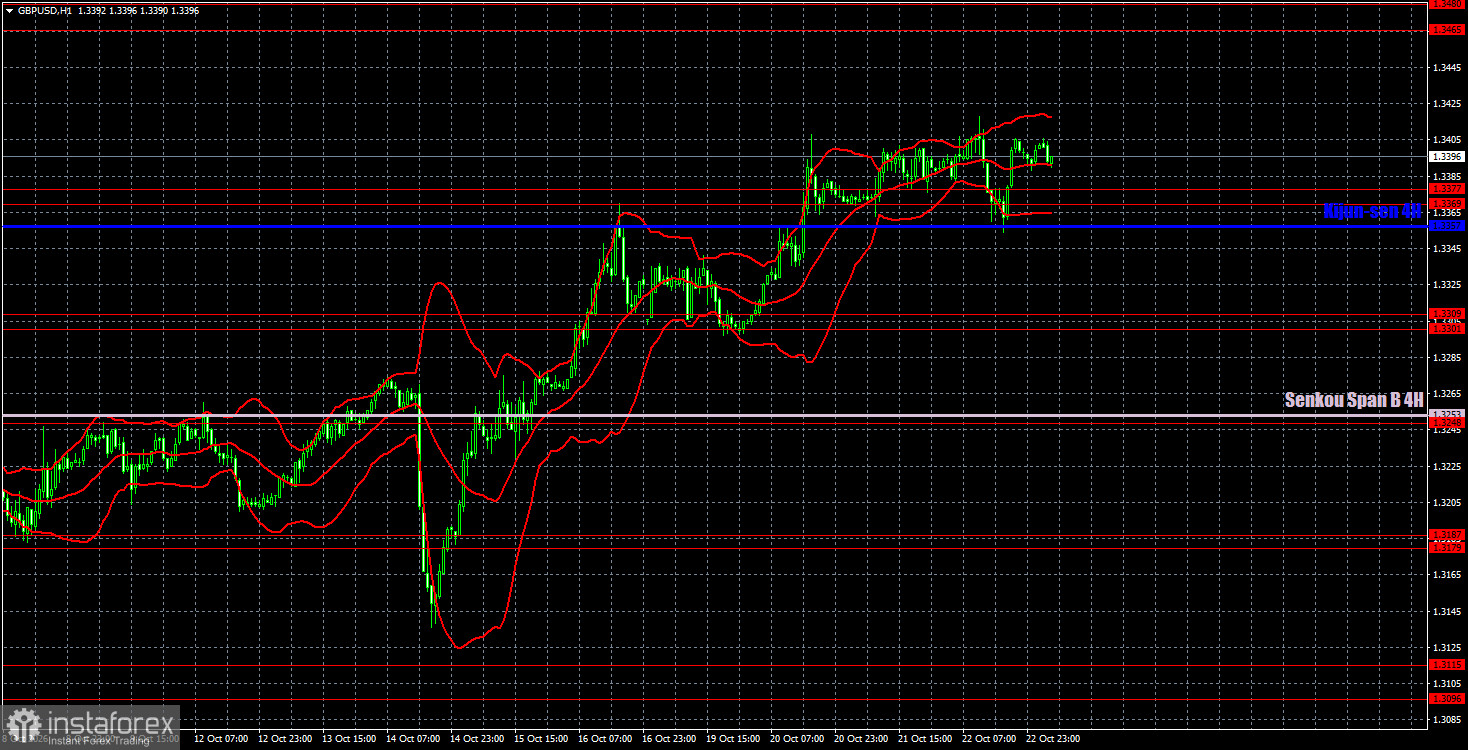
On the hourly timeframe, GBP/USD continues to form a logical and consistent uptrend. On the daily and weekly TFs, the price cleared liquidity from recent lows and remained inside sideways channels. Therefore, one can expect the pound to rise at least to 1.3650, the upper boundary of the sideways channel on the daily chart. We don't need reasons for the pound's rise, just as we didn't need reasons for the dollar's rise last month.
For October 23 we highlight the following important levels: 1.3042–1.3050, 1.3096–1.3115, 1.3179–1.3187, 1.3248, 1.3301–1.3309, 1.3369–1.3377, 1.3465–1.3480, 1.3588, 1.3671–1.3681. The Senkou Span B line (1.3253) and the Kijun-sen (1.3357) can also provide signals. It is recommended to move the Stop Loss to breakeven after the price moves 20 pips in the right direction. Ichimoku lines may shift during the day, so traders should account for this when determining trading signals.
Today the UK and the US will publish business-activity indices, and the UK reports may provoke a market reaction. The UK will also release retail-sales data, which traders may note. U.S. statistics are secondary, but price action during the U.S. session can traditionally be stronger than in Europe.
Traders can consider the 1.3301–1.3309 area as a target for short positions if the price holds below the 1.3357–1.3377 area. A bounce from the 1.3357–1.3377 area allows considering 1.3465–1.3480 as a target for long positions.


