
Xem thêm


 03.06.2026 04:02 AM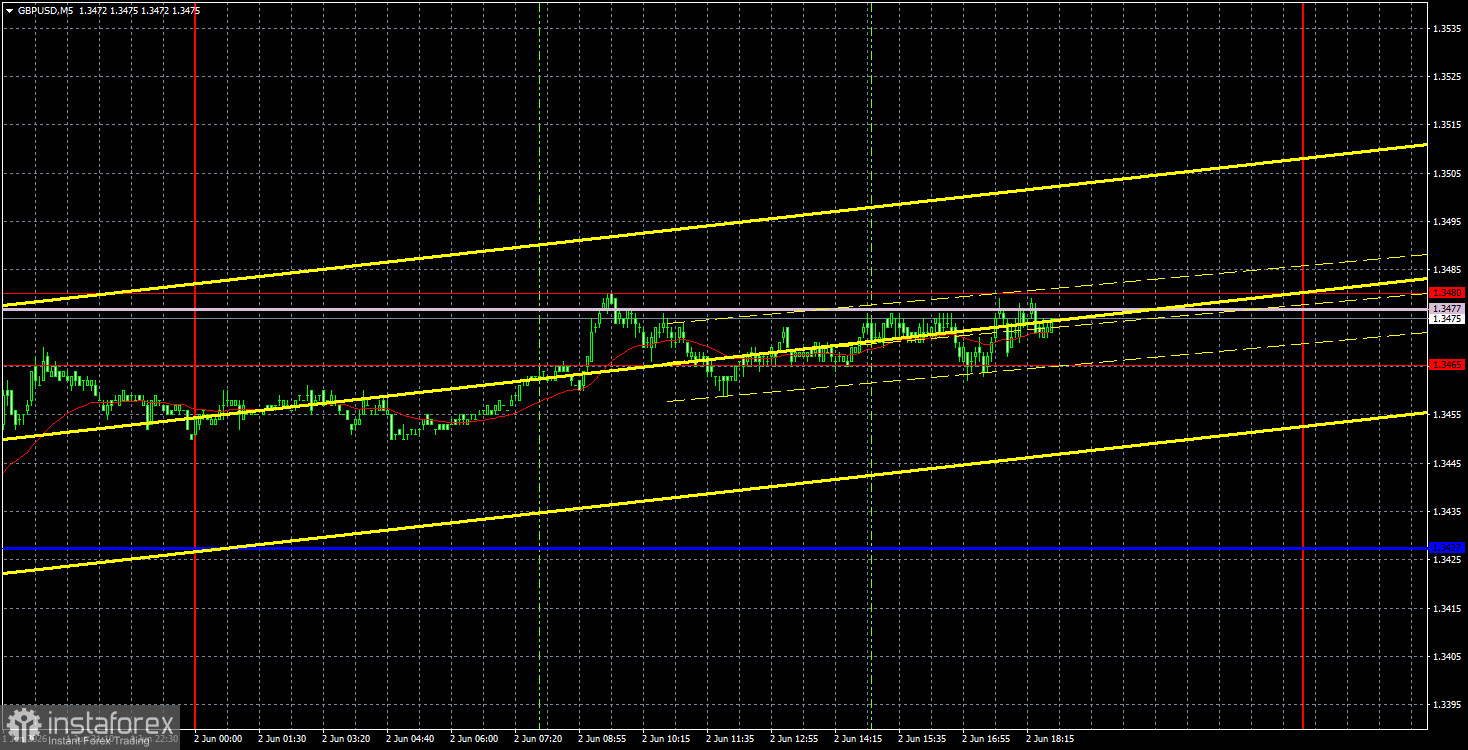
The GBP/USD currency pair also traded with low volatility on Tuesday and failed to break out of the sideways channel between 1.3377 and 1.3480. Throughout the day, we observed the pair "convulsing" around the 1.3465-1.3480 area and the Senkou Span B line. Traders were unable to either bounce off or break through this resistance, despite the release of geopolitical and macroeconomic data. In the US, the not-so-important JOLTS report on job openings was released yesterday. This report indicates how many job openings there were in a given month. In April, 7.618 million were opened, against expectations of 6.88 million, making the actual value resonant, but the market paid no attention to this release, which was not surprising. Additionally, neither Trump's new promises nor news about Iran's refusal to engage in further negotiations impacted GBP/USD.
From a technical perspective, the downward trend began after breaking the trend line, but in recent weeks, the price has been tightly stuck between 1.3369-1.3377 and 1.3465-1.3480. The upper boundary of this channel could not be overcome, so we may soon see movement towards the lower boundary. Geopolitics remains uncertain, so until the situation clarifies, the pound may remain in a sideways channel.
On the 5-minute timeframe on Tuesday, no trading signals were generated, as the price remained between 1.3465 and 1.3480, which themselves form a resistance area. This time, traders were trading the pair within the resistance area.
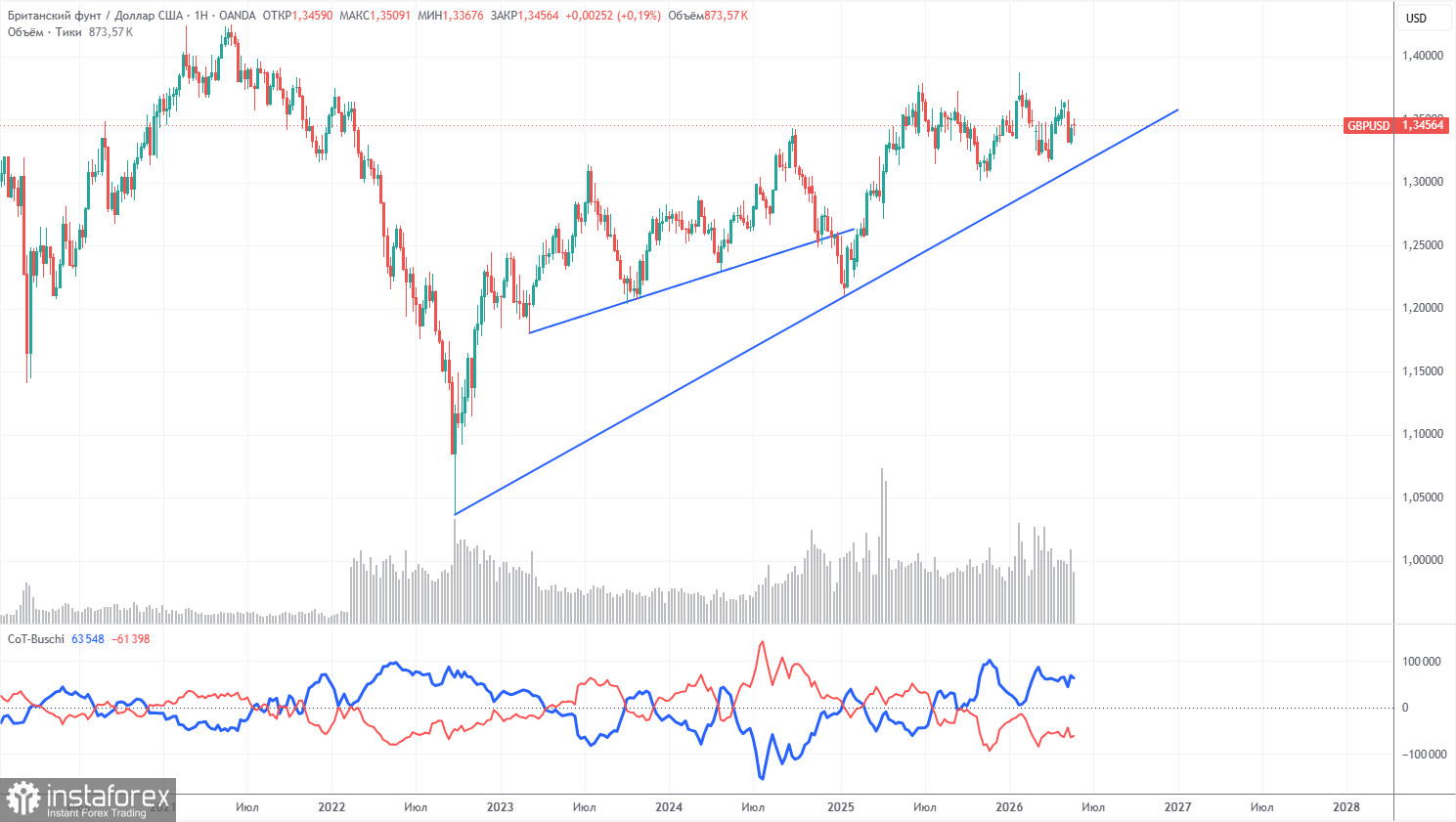
The COT reports for the British pound show that in recent years, the sentiment among commercial traders has been constantly changing. The red and blue lines reflecting the net positions of commercial and non-commercial traders frequently intersect and are mostly close to the zero mark. Currently, the lines are diverging, with non-commercial traders still dominating with... short positions. Given the events in the Middle East, it is no surprise that demand for riskier currencies is falling, while demand for the dollar is rising.
In the long term, the dollar continues to decline due to Trump's policies, as evidenced by the weekly timeframe. The trade war will continue in one form or another for a long time, and Trump's policies are both directly and indirectly aimed at weakening the American currency. However, geopolitical factors take precedence, which have recently provided strong support for the dollar. Since the conflict in the Middle East cannot be considered resolved, the US dollar can still show growth in the future. According to the latest COT report (as of May 26), the Non-Commercial group closed 10,100 buy contracts and 13,000 sell contracts. As a result, the net position of non-commercial traders increased by 3,100 contracts over the week.
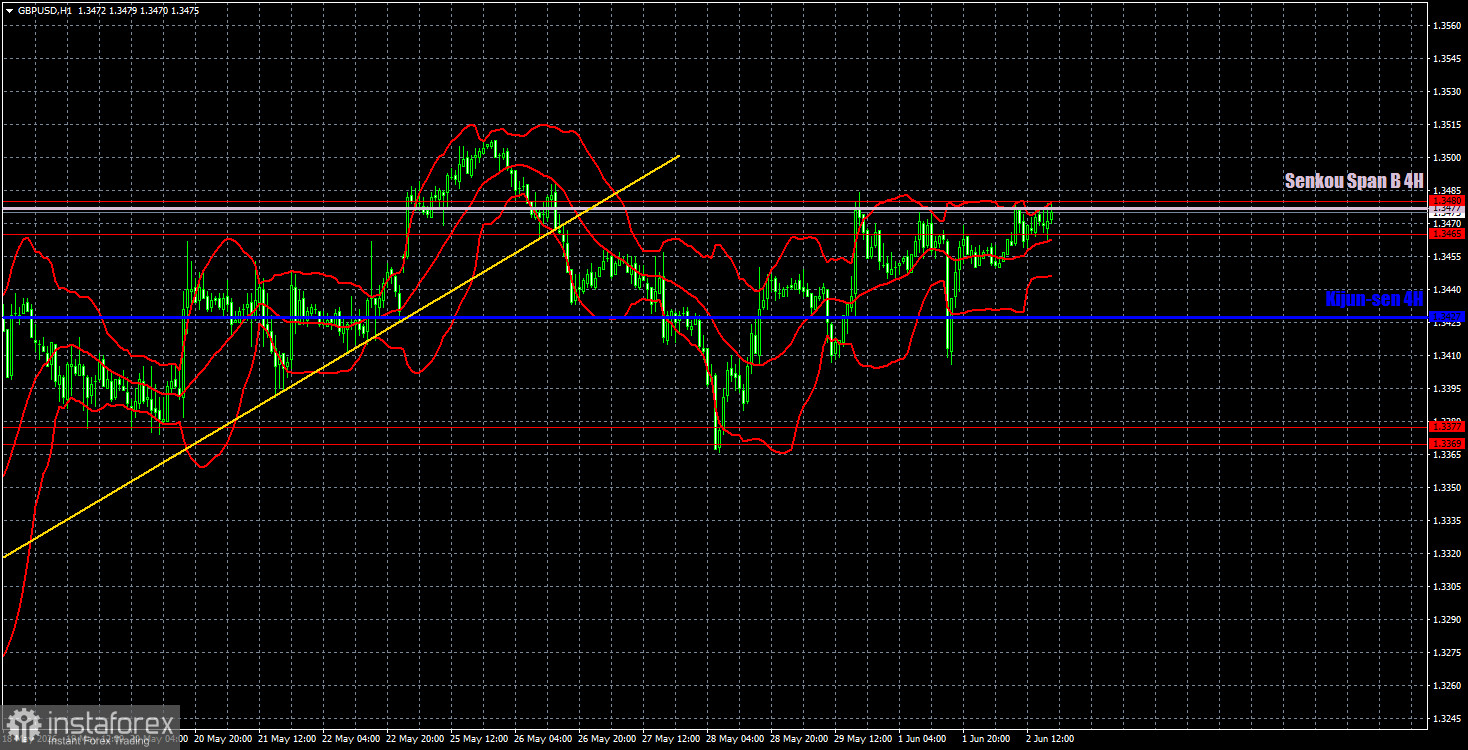
On the hourly timeframe, the GBP/USD pair has ended its upward trend due to renewed tensions around the Strait of Hormuz and the relations between Iran and the US. The macroeconomic and fundamental backdrop continues to have little impact on the pair's movements. We do not believe that without a real escalation of the conflict in the Middle East, the dollar can show strong growth. The American currency can only rely on the failure of US-Iran negotiations and a resumption of hostilities.
For June 3, we highlight the following important trading levels: 1.3096-1.3115, 1.3179-1.3187, 1.3369-1.3377, 1.3465-1.3480, 1.3588, 1.3671-1.3681, and 1.3751-1.3763. The lines of Senkou Span B (1.3477) and Kijun-sen (1.3427) may also serve as sources of signals. It is recommended to set a Stop Loss to breakeven when the price moves in the correct direction by 20 pips. The lines of the Ichimoku indicator may move throughout the day, which should be taken into account when determining trading signals.
On Wednesday, there are no significant events scheduled in the UK, while in the US, important reports such as ADP employment and ISM services activity will be published. We wouldn't be surprised if these reports are also ignored by the market.
Today, traders can open short positions targeting 1.3369-1.3377 if the pair bounces off the 1.3465-1.3480 area. Long positions can be opened on a bounce from the 1.3369-1.3377 area, targeting the 1.3465-1.3480 area.

