
Vea también


 02.09.2026 09:44 AM
Where it is thin, it tears easily. Right now, there are thin spots in several areas: the global bond market is on the verge of breaking, with the yield on 10-year Japanese bonds surpassing 3% for the first time since 1996, and British 30-year bonds reaching their highest level since 1998. Germany and France have simultaneously hit their new long-term yield peaks. The common denominator in this escalation is energy inflation, driven by a new wave of US strikes on targets in Iran and Tehran's retaliatory actions.
The rise in Treasury yields is impacting stocks not in an abstract way but quite mechanically. Future company profits are being discounted in today's dollars, and this impact is particularly sensitive for the tech sector, which thrives on expectations of distant earnings. Bonds and stocks are competing for the same investor dollars. The higher the yields on "safe" government debt, the harder it is for riskier assets to justify their place in a portfolio. Corporate debt is also becoming more expensive, along with companies' capital expenditures.
Dynamics of US manufacturing activity
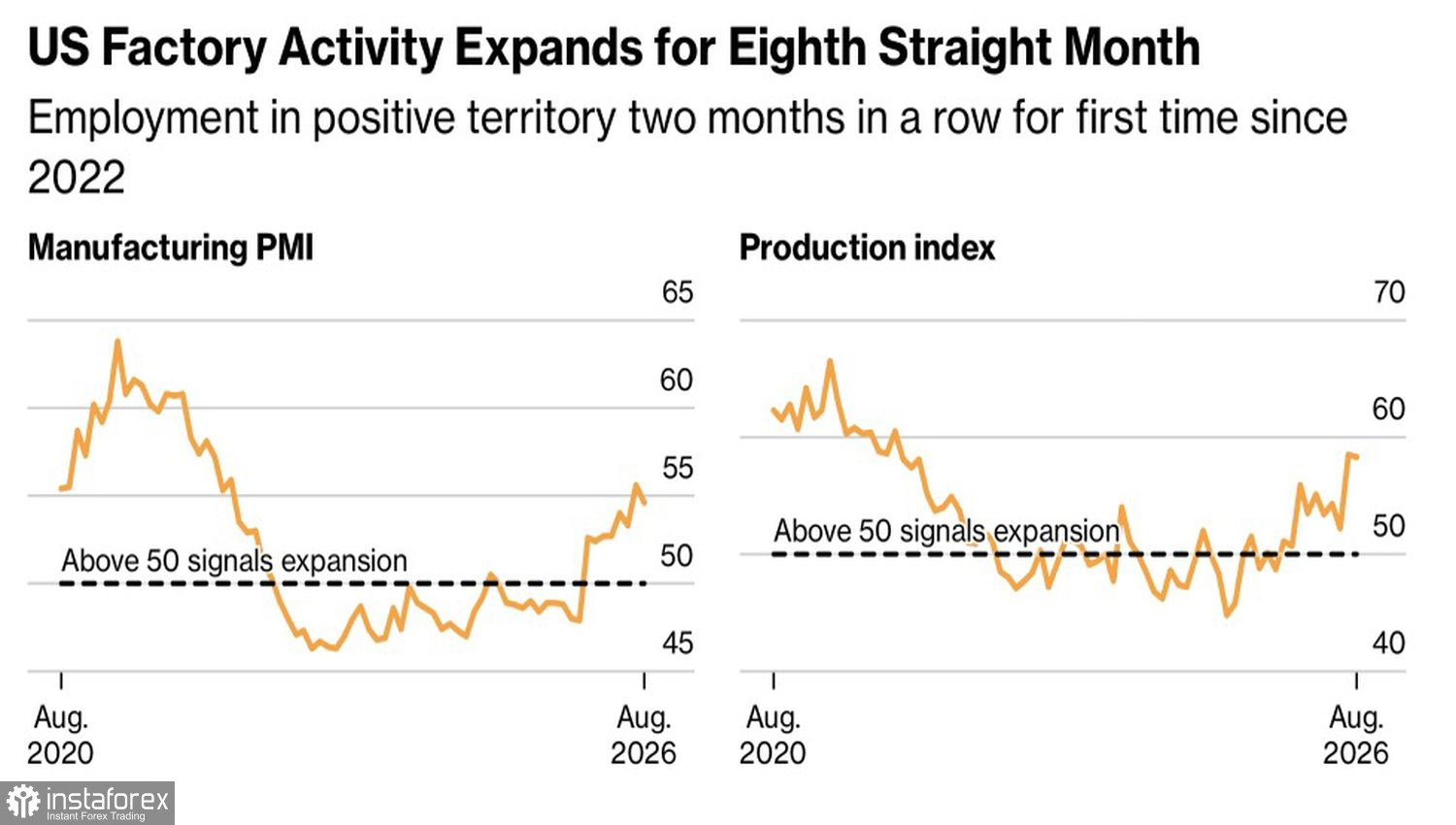
However, the Wall Street fear index, VIX, remains steadily around 16. This level is typically not associated with stress. According to LPL Financial, strong earnings and the promise of AI continue to put a floor under stocks. The firm adds that the market is currently experiencing rotations within sectors rather than a mass capital exodus, and that neither yields nor oil are likely to surge sharply further. The economy, meanwhile, shows no signs of giving way: the ISM Purchasing Managers' Index for August came in at 54.6, down from 55.6 in July. Manufacturing activity has slowed but has not come to a halt, while the boom in data centers continues to offset weakness in the housing market.
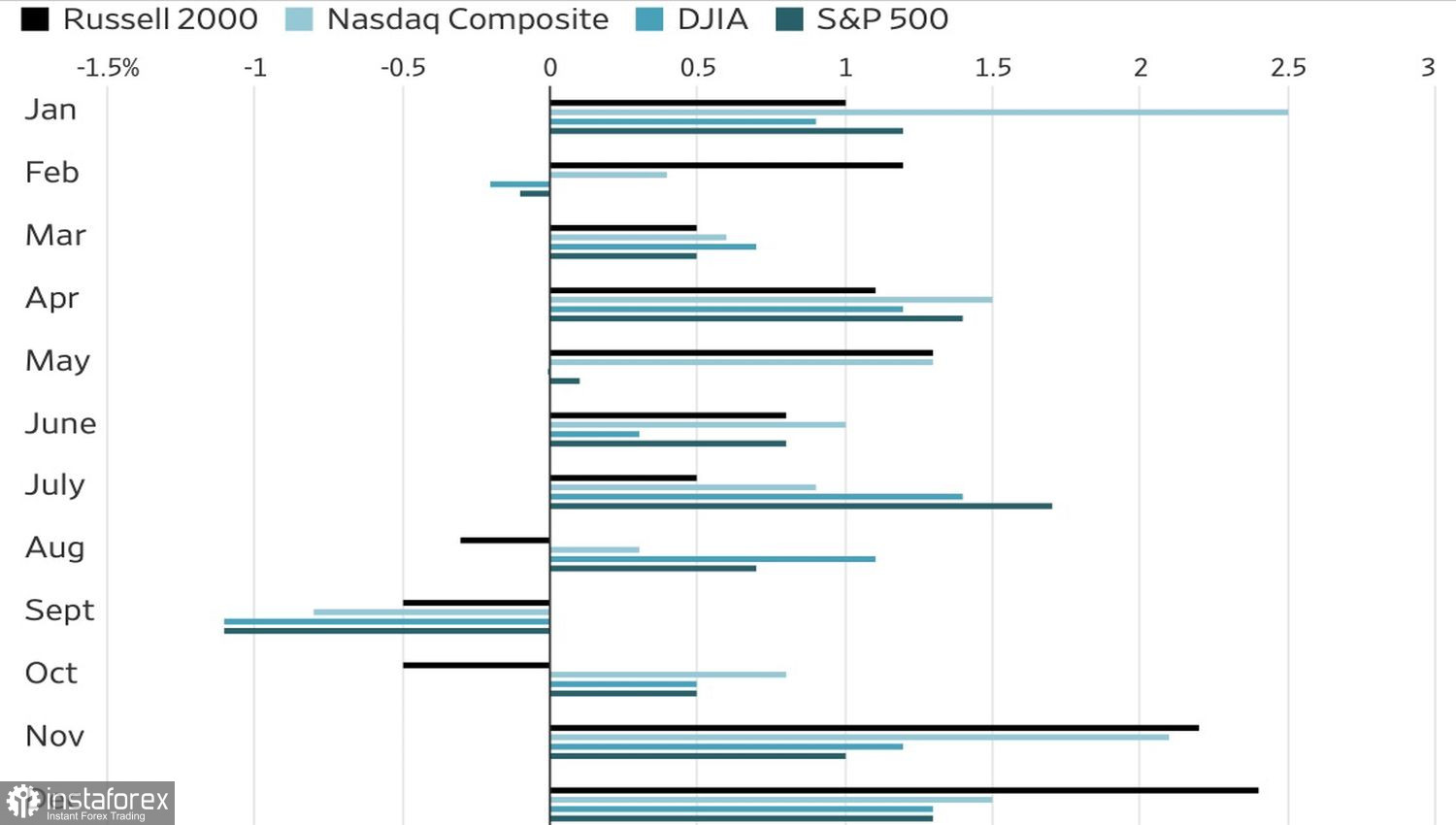
Historically, September does not forgive stocks for being complacent. Over the past three decades, the S&P 500 has averaged a loss of 0.8% in this month, while gaining an average of 0.9% in the other eleven months. Adding to this are the midterm elections and growing anxiety surrounding capital expenditures for AI. Wells Fargo is already calling for widespread caution, although the firm's own sentiment indicator remains more positive than negative. Citadel Securities and JP Morgan are not forecasting a market reversal but merely a tactical reset. Their long-term outlook on US stocks remains constructive.
Seasonal dynamics of stock indices
Thus, the market is attempting to hold the line on two fronts: rising Treasury yields and seasonal weakness, relying on the strength of earnings reports as a final defense. Will this line hold under September's pressure?
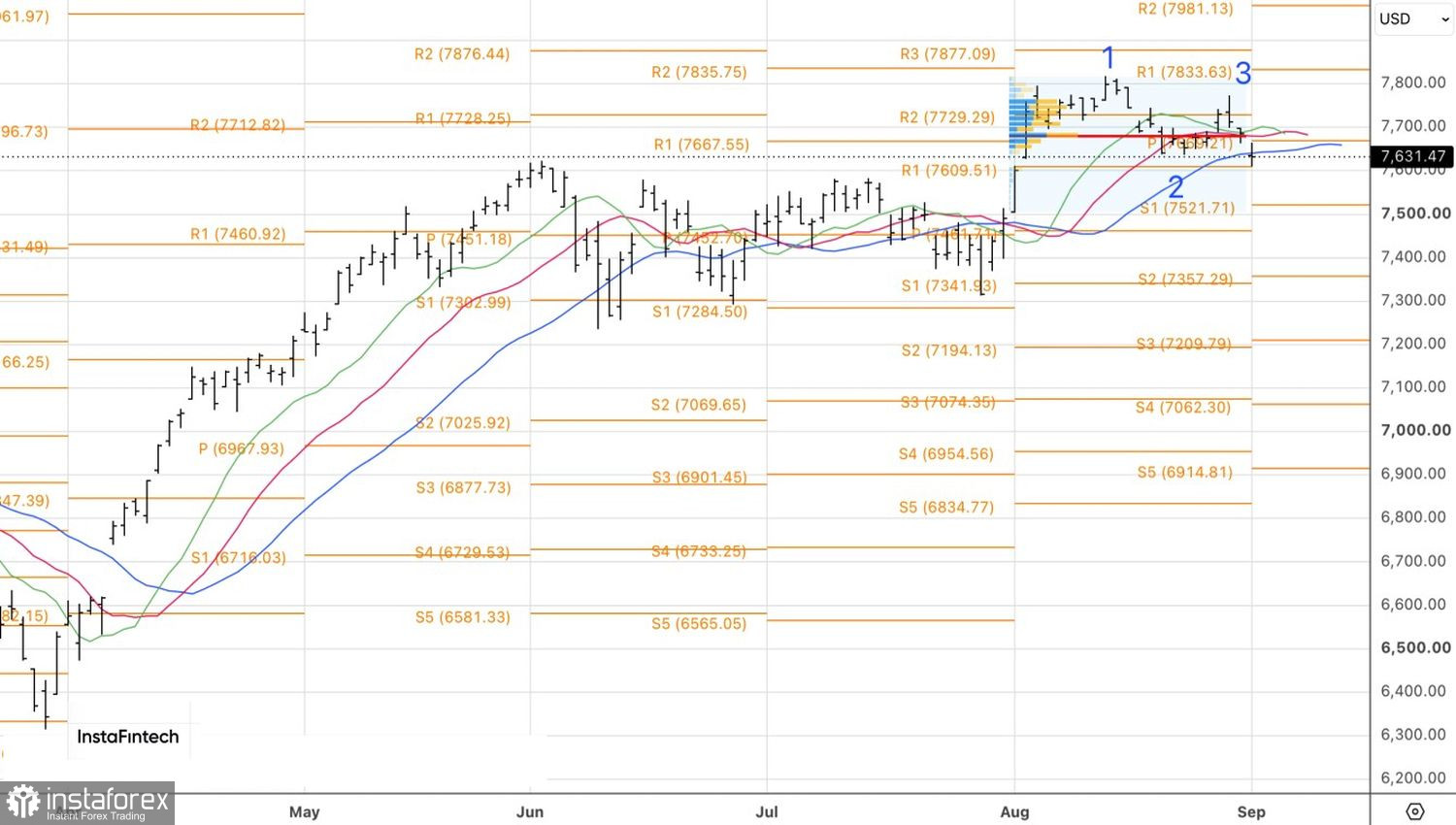
Technically, the daily S&P 500 chart has seen the activation of a 1-2-3 reversal pattern. However, the formation of a doji bar at the breach of a local low instills hope among bulls. A rise above the fair value of 7,680 would provide a reason to return to buying.


