
See also


 17.07.2026 09:29 AM
The best is the enemy of the good. That sums up investor reaction to Taiwan Semiconductor Manufacturing Co.'s results. The Taiwanese giant reported its fifth consecutive quarter of record profit — up 77% to $40bn — and a record gross margin of 67.7%. The company raised sales and capex guidance for the year, signaling that demand for chips and data-center equipment should remain strong at least through 2027. Yet TSMC ADRs fell by nearly 3% in pre-market trade.
In practice, the S&P 500 saw a classic "sell the news" response. Traders have become increasingly selective about AI stories all year, rotating favorites on concerns that massive capex is not yet translating into commensurate profit. The four largest US AI operators are expected to spend more than $725bn this year. The crucial question is whether those investments will pay off.
S&P 500 sector dynamics in July
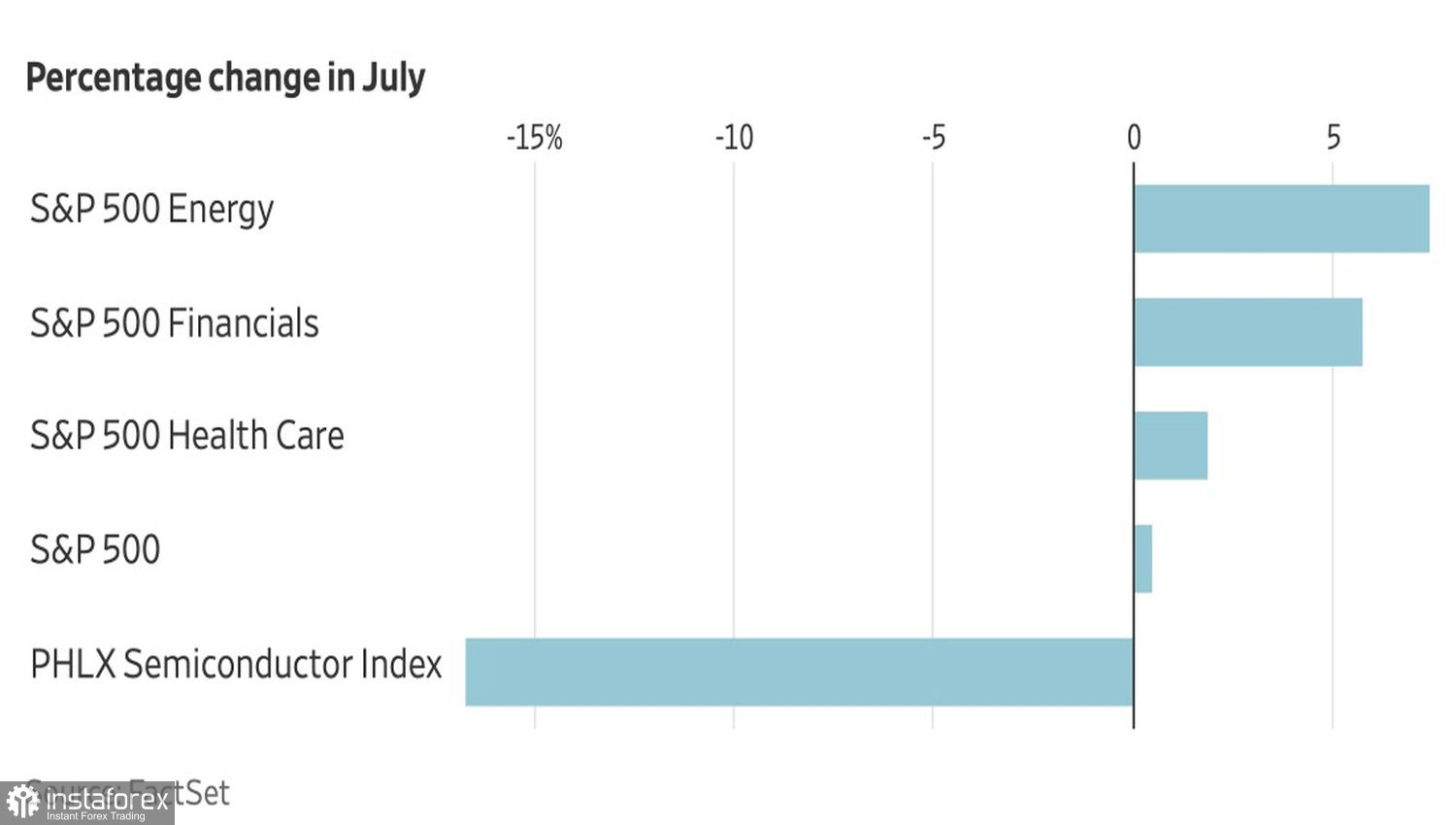
The PHLX Semiconductor Index plunged by more than 4%, dragging down Sandisk, Seagate, Micron, Intel, and AMD. Goldman Sachs reports that hedge funds' net exposure to a broad basket of AI-linked names has dropped to a one-year low, which is a clear sign that big players are locking in profits after the explosive rally.
That said, it would be wrong to assume the entire US equity market has been damaged. The equal-weighted S&P 500 rose by 1% to a record, outperforming the market-cap-weighted S&P 500 by the widest margin since 2024. That demonstrates the rest of the market is holding up well, while a handful of tech megacaps pay the price for overly ambitious expectations.
Dynamics of Fed rate expectations
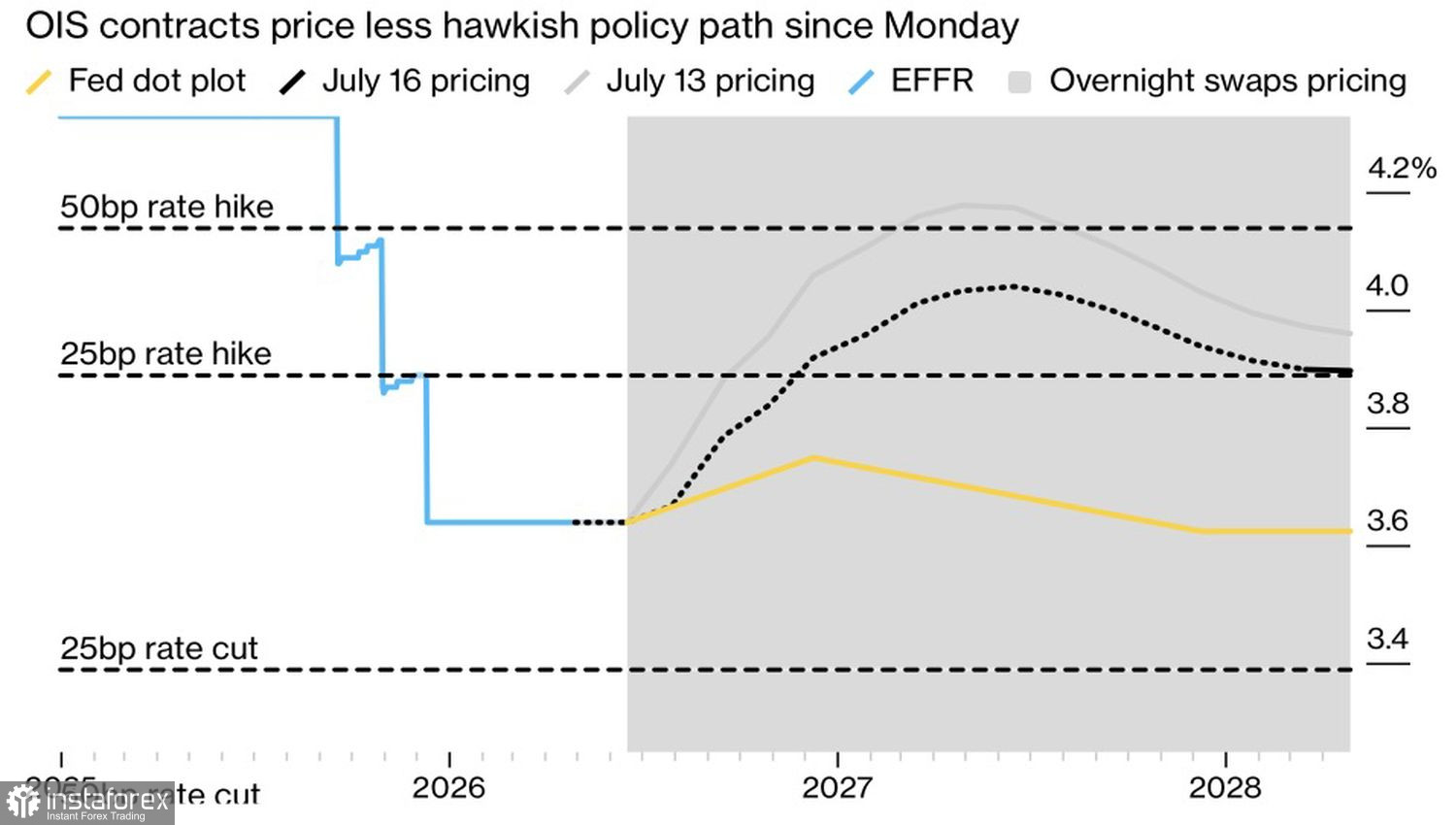
Fed commentary is also contributing to market jitters. Dallas Fed President Lorie Logan said the central bank should raise interest rates to combat elevated inflation, becoming one of the clearest hawks ahead of the July meeting. Yet, futures markets are not rushing to price in immediate tightening — the odds of a July move are only about 10%.
Macro data does not help clarify the picture. Retail sales in June rose by just 0.2% month-on-month, a notable slowdown after a revised 1% gain in May. Consumers are clearly tiring of spending at the previous pace.
In short, the chip sell-off is not a market-wide verdict but a painful re-pricing of a single stretched growth story. Investors will need to learn to separate real revenue from glossy promises. The open question remains: can AI justify hundreds of billions in investment before investor patience finally runs out?
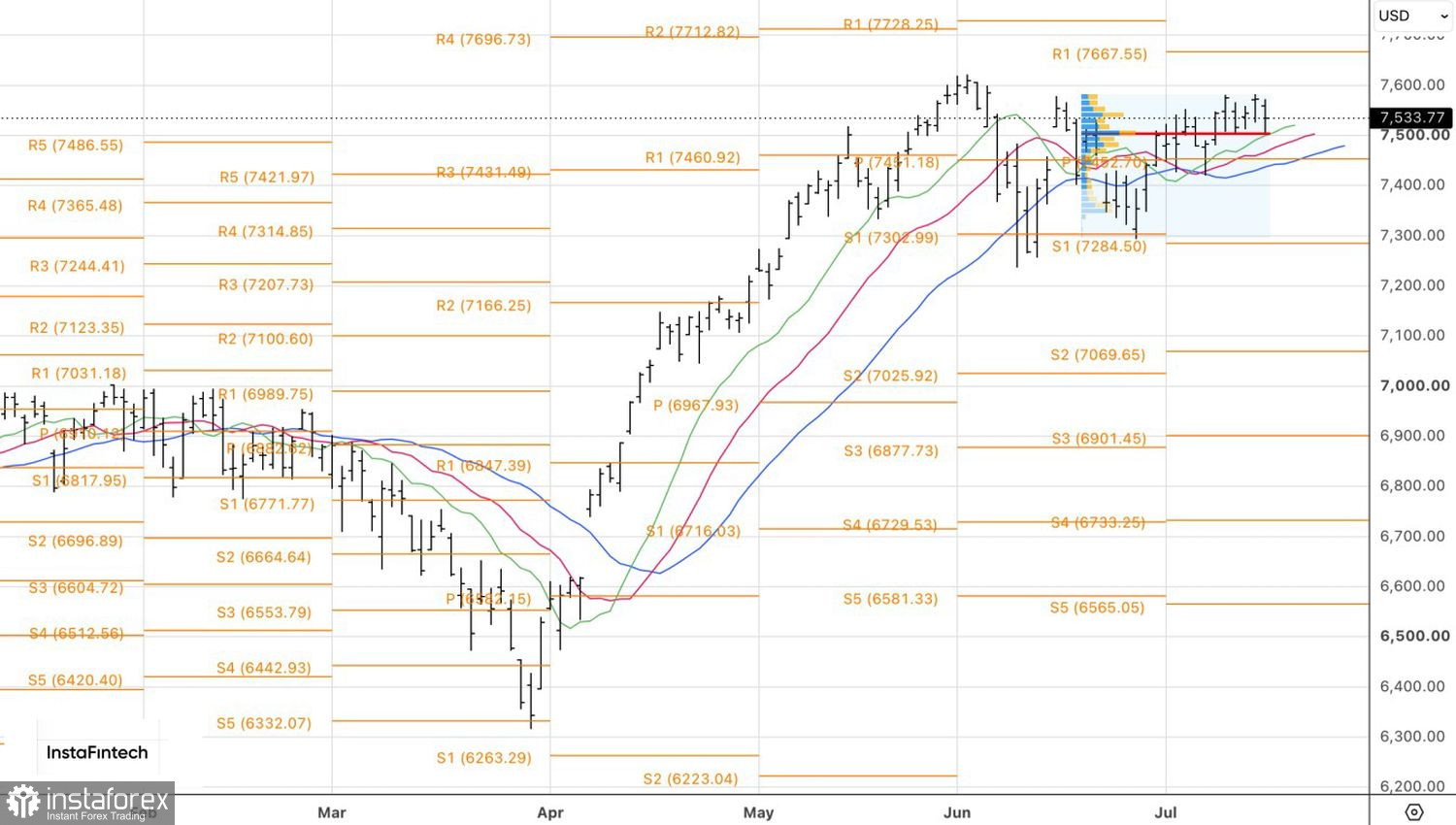
Technically, the daily chart shows that the S&P 500 is consolidating in the 7,500–7,580 range. A break above this area would be a buy signal, while a break below it would trigger a sell signal.


